What Is Venipuncture?
Venipuncture (sometimes referred to as venapuncture, venepuncture or even venu puncture) is the collection of blood from a vein which is usually done for laboratory testing.
The blood is normally drawn from a vein on the top of the hand or from the inside of the elbow.
Venipuncture requires good skills in order to perform the procedure not only correctly, but also painlessly. There are some slight risks associated with venipuncture which may include excessive bleeding, feeling light-headed, fainting, nerve damage, hematoma (accumulation of blood under the skin), and infection.
Quick Jump:
- Venipuncture Procedure
- Venipuncture Equipment
- Venipuncture Sites
- Fear of Venipuncture
- Other Types of Venipuncture
Venipuncture Procedure
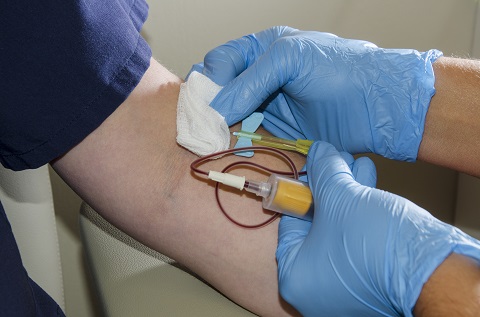

Let's take a quick, high-level look at the venipuncture procedure. For a detailed breakdown of each step of the venipuncture test scroll down.
The area where the blood is to be drawn from is first cleaned with a germ-killing solution.
Then the medical technician or phlebotomist will wrap a flexible band on the upper part of the arm to apply some pressure to that area making the vein enlarge with blood. A needle is then gently inserted into the vein.
Blood is collected into an attached vial or tube that is airtight and the flexible band is then removed from the arm. If multiple blood samples are to be taken, the phlebotomist must be careful to follow the proper order of draw.
Finally, when the necessary blood is collected, the needle will be removed and properly disposed of in a Sharps container and the puncture site will be covered to stop the bleeding.
Venipuncture Step-By-Step
The infograph below provides a detailed description of the venipuncture steps as found in our how to draw blood resource. This guide follows the steps as outlined in the World Health Organizations Guidelines on Drawing Blood: Best Practices in Phlebotomy. For the CLSI Updated Phlebotomy Procedures please click here.

Venipuncture Equipment
The equipment used during the venipuncture test can vary, but the following are most commonly used for routine venipuncture:
- Collection tubes
- Needles
- Tourniquet
- Wipes/Swabs
- Gauze
- Bandages
- Gloves
- Disposal unit
Venipuncture Sites
Phlebotomists may choose to draw blood from several different sites of the body
Most commonly, venipuncture will be performed on the Antecubital Fossa, or the inside of the elbow. Here phlebotomists will typically choose from three veins: the median cubital vein, the cephalic vein or the basilic vein.
If the tech is not comfortable with any of the veins in the inside elbow area, they may choose a dorsal vein in the hand or, as a last resort, choose a vein in the foot.
In some cases, a phlebotomist may have to switch sites if they find the blood is not properly flowing from the vein.
Fear of Venipuncture
It is not uncommon for adults and children to feel some fear when having blood drawn, which is why any discussion of venipuncture should at least bring this topic to focus.
Some individuals are afraid of needles, while others are frightened at the sight of blood. When multiple vials of blood are collected it can seem like a large amount. However, blood samples that are normally taken are actually very small. A typical single vial contains about five milliliters, which is about one teaspoon. Even if several vials of blood have to be drawn it usually amounts to no more than one ounce. Compared to the standard blood donation which is about sixteen ounces, one ounce is really small.
Of course, the phlebotomist may understand this, however, the patient may not. This is why a required skill for most phlebotomy jobs is to have excellent people skills with the ability to keep the patient calm during the venipuncture procedure.
Other Types of Venipuncture
Venipuncture can also happen when patients have intravenous (IV) lines started.
In most of these cases, the skin on the hand is pierced and a vein is accessed so medications or fluids can be given intravenously. This type of venipuncture procedure is a little different, and sometimes can be a little more involved.
When there is an IV line present, blood can be drawn from this line. In other words, there is no need for another venipuncture procedure.
IV lines are very useful in hospitals because some patients require frequent blood tests.
Reviewed on April 5, 2018